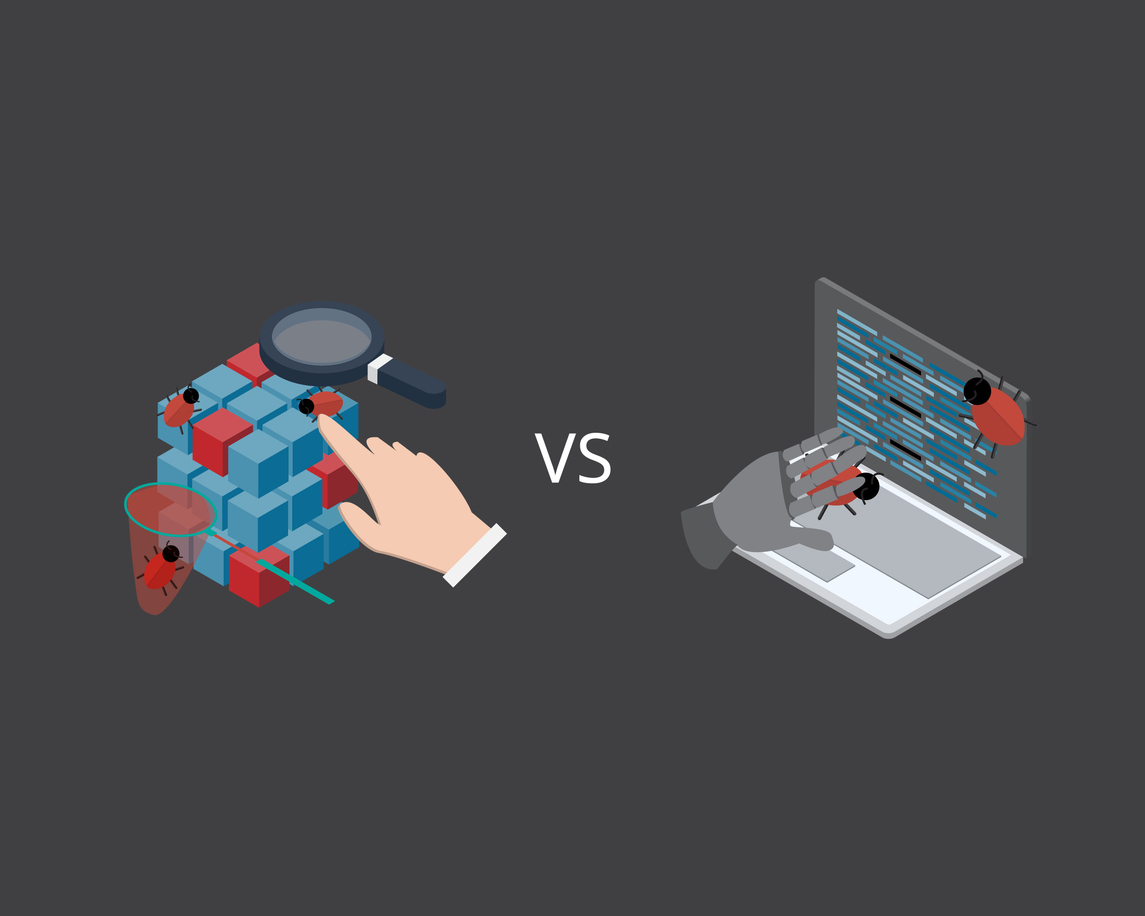
As applications grow more complex, traditional test automation is struggling to keep up. Modern systems are dynamic, interconnected, and constantly changing—yet many QA teams still rely on brittle scripts tied directly to the UI. Every UI change triggers maintenance. Every new workflow requires rework. The result is slow testing, limited reuse, and quality that can’t scale.
Digital Twin testing offers a fundamentally different approach—one designed for continuous quality at enterprise scale.
From Static Scripts to Living Models
At its core, Digital Twin testing replaces fragile, script-based automation with a model of how an application actually behaves. Formerly known as Blueprint models, Digital Twins capture the structure, flows, and logic of an application—independent of any single UI implementation.
Instead of hardcoding steps like “click this button” or “find this locator,” a Digital Twin maps:
- User journeys and business workflows
- Application states and transitions
- Inputs, outputs, and system responses
- Relationships between UI, APIs, and backend logic
This creates a living representation of the application—one that mirrors real behavior, not just screen interactions.
How Digital Twins Enable Reusable Automation
Once an application’s behavior is modeled, testing becomes dramatically more reusable. Tests are no longer tightly coupled to individual pages or layouts. Instead, they reference the Digital Twin model, which acts as a stable foundation even as the application evolves.
When a UI changes, the underlying behavior often stays the same. Because the Digital Twin is behavior-driven, tests continue to work without constant maintenance. Teams can reuse the same model across:
- Regression testing
- Cross-browser and cross-device testing
- API and end-to-end validation
- Performance and scenario-based testing
This reuse reduces test creation time, minimizes maintenance, and allows QA to scale without increasing effort.
Scaling Quality Through Continuous Change
Digital Twin testing is especially powerful in environments with frequent releases. As new features are added or workflows evolve, the Digital Twin can be extended—not rebuilt. Updates to the model automatically propagate across all related tests, keeping coverage current without rewriting scripts.
This approach supports true continuous quality:
- Faster test creation for new features
- Automatic alignment between application behavior and test coverage
- Reduced technical debt in automation suites
- Confidence to release more often
Instead of QA chasing changes, the model evolves alongside the application.
Beyond the UI: Full-System Understanding
Because Digital Twins are not limited to UI interactions, they enable deeper testing across the entire system. QA teams can validate how UI actions trigger API calls, how backend services respond, and how data flows across components—all within a single, unified model.
This holistic view helps teams catch issues earlier, test more intelligently, and ensure that changes in one part of the system don’t break another.
From Blueprints to Continuous Quality
What began as Blueprint modeling has evolved into full Digital Twin testing—an approach that transforms automation from a fragile set of scripts into a scalable quality system.
By mapping application behavior once and reusing it everywhere, Digital Twin testing enables QA teams to move faster, test smarter, and maintain confidence as software continuously changes.
In a world of constant releases and growing complexity, Digital Twins provide the foundation for quality that truly scales.