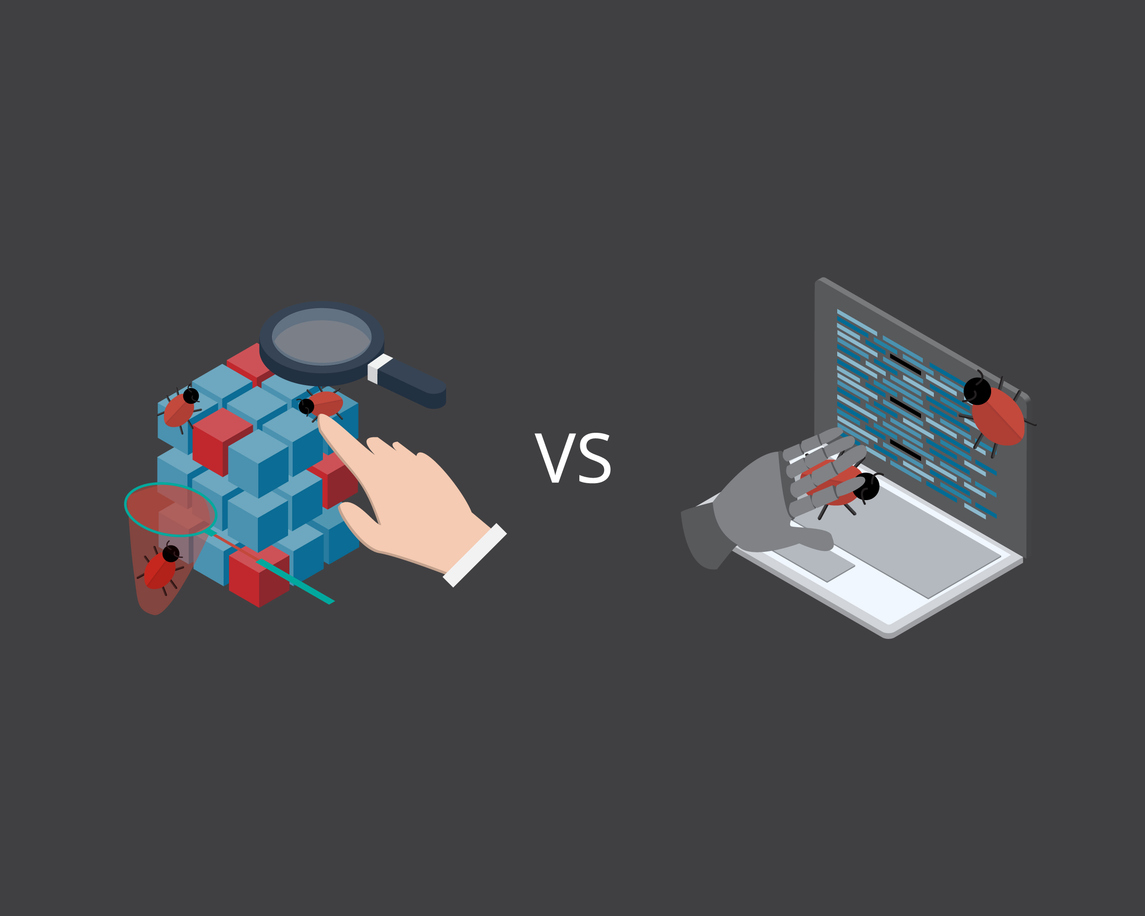
“AI-powered testing” can describe very different capabilities. One system turns a documented test case into executable automation. Another explores application behavior to identify meaningful tests nobody documented.
Both generate tests. But they solve different problems.
Understanding GENI vs. AISG Bug Hunter starts with that distinction: GENI automates existing test intent, while AISG Bug Hunter uses the AIQ Digital Twin to discover additional valid flows beyond the tests teams already wrote.
GENI: Automate the Intent You Already Have
Your existing test cases contain valuable business knowledge. They describe what users need to accomplish, which rules must hold, and what successful behavior looks like.
The challenge is turning that knowledge into automation without creating a scripting bottleneck.
GENI converts natural-language test cases into production-grade Playwright Python. It helps teams put their established regression knowledge to work without manually translating every instruction into code.
Consider an e-commerce test case:
“Sign in, add an available item to the cart, apply an eligible discount, and complete checkout.”
The team has already defined the intended journey. GENI’s role is to translate that intent into executable automation.
That distinction matters: automating a documented journey helps protect known behavior, but it doesn’t establish whether the original test suite includes every important scenario.
AISG Bug Hunter: Discover Additional Tests
Even a carefully maintained regression suite reflects what people thought to include.
Applications contain more states and transitions than a checklist can easily capture. Available actions and expected outcomes can change with user permissions, previous actions, validation errors, or session status.
AISG Bug Hunter addresses this discovery challenge.
It uses the AIQ Digital Twin to understand application states, elements, transitions, and business behavior. It then explores those states against business requirements to identify additional valid test flows.
Returning to the checkout example, additional testing questions might include:
- What happens when a shopper changes the cart after applying a discount?
- Does checkout behave correctly after a validation error?
- What happens when an interrupted session resumes?
These are illustrative questions, rather than guaranteed discoveries. They show how testing can expand beyond the original successful purchase journey.
The purpose is meaningful exploration grounded in expected business behavior.
Why QA Teams Need Both
GENI and AISG Bug Hunter address complementary gaps.
GENI helps close the gap between documented test intent and executable automation. AISG Bug Hunter helps close the gap between documented tests and additional application behavior worth testing.
Faster script creation alone cannot resolve omissions in the original test plan. Broader discovery also doesn’t replace the business knowledge captured in existing regression tests.
Together, the two capabilities help teams preserve that knowledge while expanding their view of application risk.
Connect Generation and Discovery to Release Decisions
Within AIQ, these capabilities connect to centralized execution, governance, evidence, history, and reporting. Teams can use the surrounding platform to investigate outcomes and inform release decisions.
A stronger quality strategy asks two questions: “Have we automated the tests we know matter?” and “What important behavior have we overlooked?”
Explore Appvance GENI and AISG Bug Hunter to address both.